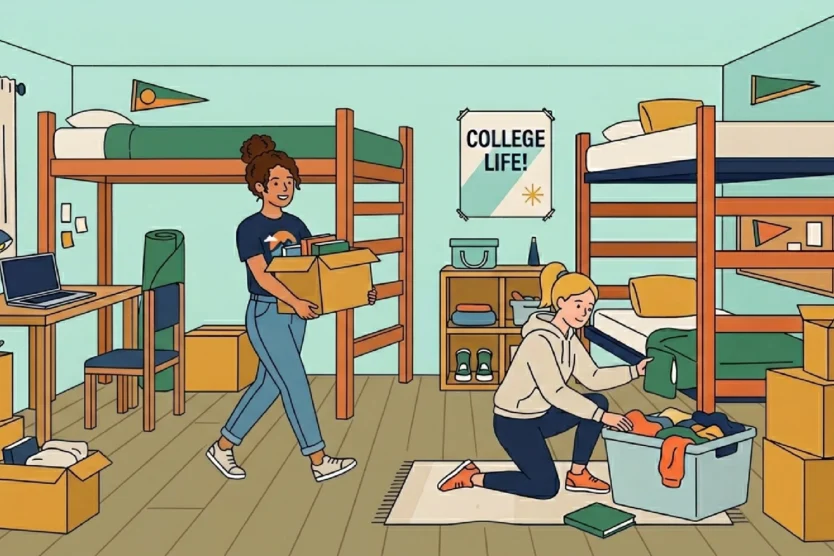
Moving into a dorm room is one of the biggest milestones of starting college. It could even be the first time you’ll share a living space with someone outside your family. In a recent episode of Countdown2College, Gage spoke with Brian Stutz, director of residential life and education at Doane University, about choosing a roommate, setting expectations, handling conflicts, and making the most of the college roommate experience.
Why does the relationship with your roommate matter so much?
Your roommate is one of the first people you’ll get to know in college. Since you’ll share a small space and spend a lot of time together, the relationship often shapes your overall college experience. Similar schedules, sleep habits, and lifestyles make day-to-day living easier, which is why many colleges use housing questionnaires to match students based on their living preferences and routines.
Brian recommends getting to know your roommate before move-in day, rather than making assumptions based on social media. A conversation can tell you much more than a few posts ever will, so give your rommie a call!
What should we talk about before move-in day?
Again, connect with your future roommate now to decide who will bring what, so you don’t end up with duplicate TVs, microwaves, or other large items. Be sure to talk about your needs and expectations, including:
- Sleep schedules.
- Room temperature.
- Cleaning habits.
- Guests and visitors.
- Quiet hours and study time.
- Shared items like snacks or appliances.
Starting these conversations early can help prevent misunderstandings and make move-in day much less stressful.
How can I set healthy boundaries with my roommate?
Many colleges ask students to complete a roommate agreement shortly after moving in. Brian said these agreements should be treated as living documents, meaning they can be updated as schedules and routines change throughout the semester.
It’s also important to remember that your roommate doesn’t have to become your best friend. Some roommates become lifelong friends, while others become respectful people who share a space. Both outcomes are completely okay.
What should I do if my roommate and I have a conflict?
Disagreements are a normal part of sharing a living space. Brian says many roommate conflicts stem from unclear expectations or poor communication. If an issue arises, address it early by discussing the specific concern, listening to each other’s perspectives, and working together to find a solution. If you’re unable to resolve the issue, your Resident Assistant (RA), Community Advisor (CA), or residence life staff can help facilitate the conversation.
What if my roommate and I aren’t a good match?
Sometimes, despite everyone’s best efforts, roommates aren’t compatible. Before assuming the situation can’t be fixed, give yourselves time to adjust. Brian recommends giving the roommate relationship at least a couple of weeks before deciding it isn’t working. The first weeks of college are a major transition period, and many issues improve as routines begin to settle.
If problems continue after you’ve communicated openly and tried to work through them, talk with the residence life staff. Depending on your school’s policies and housing availability, there may be options to switch rooms or participate in a roommate swap.
How can roommates help each other succeed academically?
Roommates can become great accountability partners. You don’t have to be in the same major to encourage one another to succeed. Respecting quiet study times, limiting distractions, or giving each other a reminder before class can make a big difference. Being supportive doesn’t mean becoming each other’s parent. It means you work to create an environment where both roommates can stay focused and reach their goals.
What should I know about living with a roommate?
Brian’s biggest advice is to keep your expectations realistic and communicate clearly and often. Your roommate doesn’t have to become your best friend for you to have a successful college experience. The more you talk about schedules, boundaries, and living habits, the easier it becomes to work through challenges together.
College is full of new experiences, and learning to live with another person is one of the biggest. Approach it with flexibility, realistic expectations, and an open mind, and you’ll build skills that will benefit you throughout college and beyond.

July 28, 2026 · Season 2 · Episode 52
The Roommate Survival Guide
By Brian Stutz & Gage
You can pick your classes. You can pick your major. Your roommate? Sometimes that’s a little more complicated. 😅 In this episode of Countdown2College, Gage sits down with Brian Stutz, Director of Residential Life and Education at Doane University, to talk about what actually makes a good roommate relationship. If sharing a room has you a little nervous, try some of these tips!