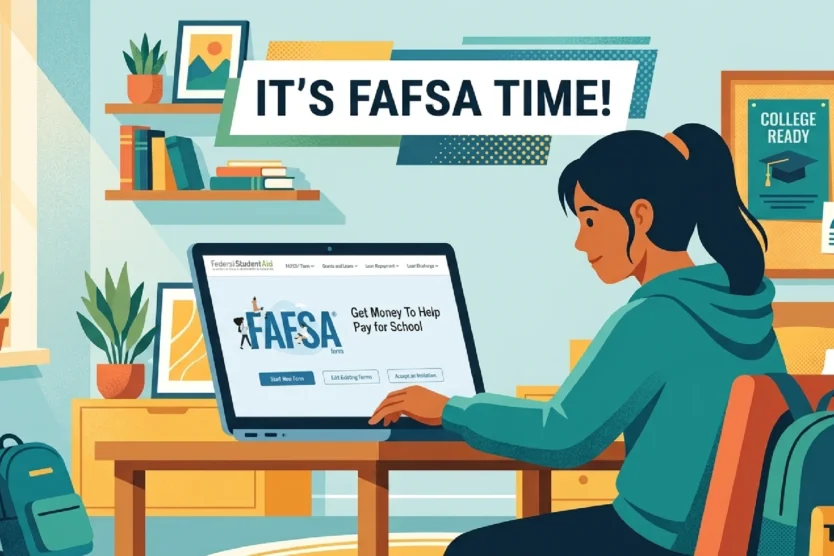
The 2027-28 FAFSA is live! Now is the time to complete the form and take an important step toward paying for college. While the FAFSA may seem complicated at first, preparing your information and knowing what to expect can make the process much easier.
In a recent episode of Countdown2College, Gage spoke with EducationQuest’s Omaha Outreach Manager, Kim Brown, about completing the FAFSA, avoiding common mistakes, and where to turn for help.
What is the FAFSA, and why is it important?
The FAFSA, or Free Application for Federal Student Aid, is the form students complete to apply for financial aid for college. Completing it can open the door to grants, scholarships, work-study, federal student loans, and other types of financial aid. Whether you’re considering a two-year or four-year college, trade program, apprenticeship, or another path after high school, completing the FAFSA is an important step.
What should I do before starting the FAFSA?
Before starting the form, make sure you and your parent or contributor have created your own Federal Student Aid accounts at StudentAid.gov. Each person needs a separate username and password because the account is tied to that individual. Kim recommends creating your accounts in advance and keeping your login information in a safe place. Recovering an account later can take extra time, especially if you lose access to the email connected to it.
How do I get started?
Once your StudentAid.gov account is ready, sign in and select the correct FAFSA form. Students who are seniors during the 2026-27 school year and plan to attend college next fall should complete the 2027-28 FAFSA. If possible, Kim recommends that students and parents work on the FAFSA together. Having everyone available with the necessary information can help the process go more smoothly.
What are some common FAFSA mistakes to avoid?
Even though the FAFSA has become more streamlined, certain questions can still cause confusion. Taking your time and reading each question carefully can help you avoid errors. Here are some to watch for:
- Determine which parent or contributor needs to provide information.
- Enter current asset information correctly.
- Select the correct FAFSA year.
- Use the correct StudentAid.gov account for each person.
- Review information before submitting the form.
If you aren’t sure how to answer a question, don’t guess. EducationQuest can help you understand what information the FAFSA is asking for based on your situation.
What happens after I submit the FAFSA?
After your application is processed, you’ll receive a FAFSA Submission Summary. This provides information from your form, including your Student Aid Index and potential eligibility for federal financial aid such as the Pell Grant, work-study, and student loans. You may also be selected for verification, which means a college needs additional documentation to confirm information on your FAFSA. If that happens, check your email and college student portal and provide the requested information as soon as possible.
Where can I get help completing the FAFSA?
EducationQuest offers free resources to help students and families throughout the process. You can use the FAFSA Checklist to gather what you need, explore FAFSA tools, watch the step-by-step FAFSA demo video, or attend an EducationQuest financial aid webinar. You can also schedule an in-person or virtual appointment with a college planning specialist who can walk you through the FAFSA and answer questions along the way.
What should I expect at an EducationQuest FAFSA appointment?
If this is your first time completing the FAFSA, meeting with an EducationQuest college planning specialist can make the process easier to understand. Before your appointment, you’ll receive information about what to bring so you can arrive prepared. During the appointment, a specialist can help you work through the form and answer questions specific to your family’s situation.
What’s the best tip for completing the FAFSA?
Kim’s biggest tip is simple: don’t wait until the last minute. Create your StudentAid.gov account, gather your information, and give yourself plenty of time to complete the form. If you run into questions, ask for help. EducationQuest’s services are free, and our team is available to help students and families understand the process from start to finish. Taking it one step at a time can make completing the FAFSA feel much more manageable.

October 6, 2026 · Season 3 · Episode 5
It's FAFSA Time!
By Kim Brown & Gage Boardman
The FAFSA is open, but this isn’t something you want sitting at the bottom of your to-do list. ⏰ In this episode of Countdown2College, Gage is joined by Kim Brown, Omaha Outreach Manager at EducationQuest Foundation, to share tips and advice students and families should know as they complete the form.