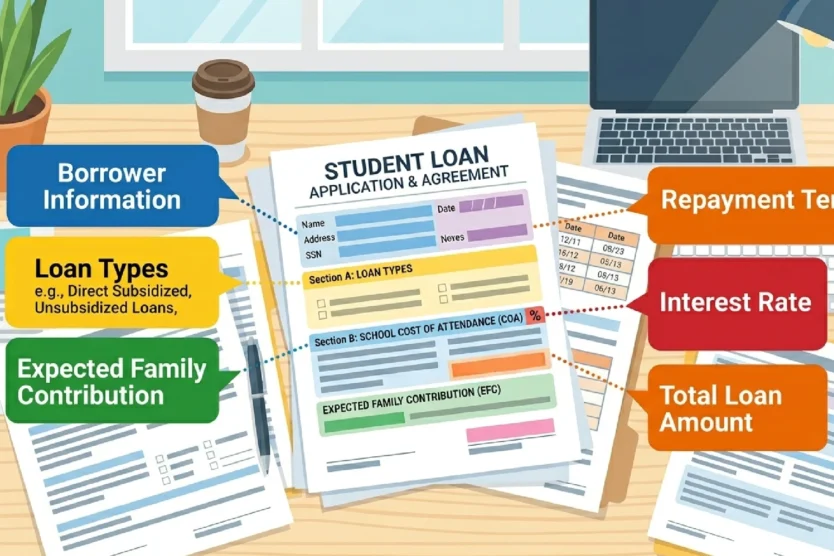
Not sure how student loans work or how much to borrow for college? What if you could better understand your options before making a financial decision that impacts your future? In a recent episode of Countdown2College, Gage spoke with Justin Chase Brown, director of scholarships and financial aid at the University of Nebraska-Lincoln, about how student loans work and how students can borrow smart.
What is a student loan?
A student loan is money you borrow to help pay for college, which you repay later with interest. Unlike scholarships or grants, which are considered “gift aid,” loans must be paid back. Most students don’t have to start making payments while they’re in school, but interest may still build depending on the type of loan.
Why do students need loans?
Student loans help cover the gap between the total cost of college and other financial resources, such as scholarships, grants, and family contributions. That gap doesn’t just include tuition; it can also include housing, food, books, and other living expenses. For some families, loans are a way to spread out the cost of college over time rather than paying everything up front.
What’s the difference between federal and private loans?
Not all student loans are the same, and understanding the difference is important. Federal loans usually offer fixed interest rates, flexible payment plans, and options to help if your financial situation changes. Private loans are different. They require a credit check, can have changing interest rates, and don’t offer as much support. It’s important to understand your options and how each loan type works.
How much should you borrow?
There is no one-size-fits-all answer, but a helpful guideline is to avoid borrowing more than what you can expect to earn in your first year after graduation. Another way to think about it: for every $10,000 borrowed, you can expect, roughly, a $100 monthly payment. The key is not just how much you can borrow, but how that amount will impact your wallet when it’s time to repay.
When do you start paying back your loans?
Most federal student loans don’t require payments until about six months after you graduate or leave school. However, interest may build during that time, especially on certain types of loans. Private loans can vary, and some may require payments while you’re still in school.
What are common mistakes students make?
Student loans can feel abstract while you’re in school, which can lead to mistakes like borrowing more than needed, not tracking your balance, or overlooking how interest builds. Staying informed and regularly checking your loans can help avoid surprises later.
What repayment options are available?
There are several repayment plans available, especially for federal loans. These can include standard, extended, or income-driven plans. If you’re struggling, options like forbearance or adjusted payment plans may be available, though interest may continue to grow. Additionally, there’s no penalty for paying off federal loans early, which can help reduce the total amount you repay over time.
How can I borrow smart?
You can make the most of your borrowing decisions if you:
- Borrow only what you truly need.
- Understand the terms before accepting a loan.
- Check your loan balance regularly.
- Think about future repayment while you’re still in school.
- Ask for help from financial aid advisors when needed.
Student loans can be a helpful tool to pay for college, but they require careful planning. Being informed and intentional can make a big difference in your financial future.
Be intentional with your borrowing decisions.
Student loans can be a helpful way to pay for college, but they’re just one part of a bigger picture. Taking time to think through your choices now can help you feel more confident as you plan for what comes next. Even small steps, like understanding how much you’re borrowing and what repayment might look like, can make a big difference down the road.
April 7, 2026 · Season 2 · Episode 36
Loan and Behold: Student Loans Explained
By Justin Chase Brown & Gage
Student loans can get confusing fast, but they don’t have to be. 👀💰 In this episode, Gage sits down Justin Chase Brown, Senior Director of Scholarships and Financial Aid at the University of Nebraska-Lincoln, to break down what you’re actually signing up for, how loans work, and how to borrow smart.