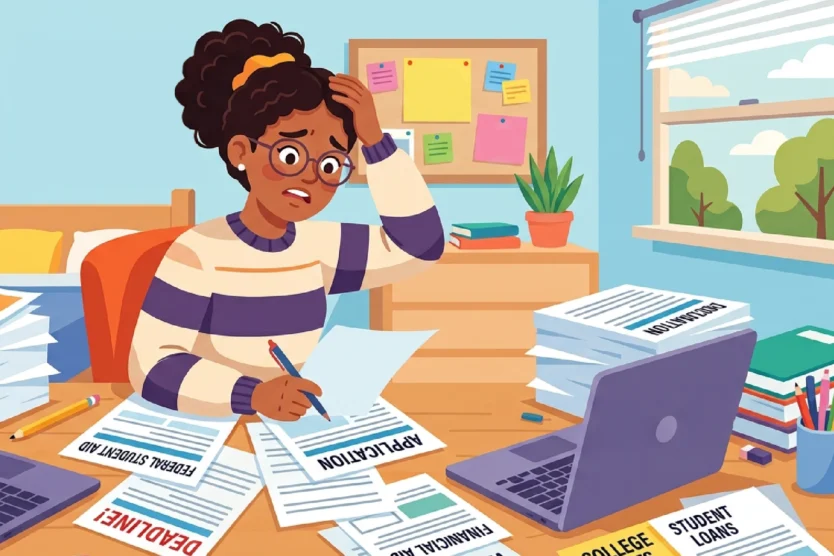
FAFSA season is right around the corner, and preparing now can make completing the form much easier. From creating your Federal Student Aid ID to gathering financial information, there are some steps students and families can take before the FAFSA opens on Oct. 1. In a recent episode of Countdown2College, Gage spoke with EducationQuest senior college planning specialist Jacquie Butler about what to expect from the FAFSA and how to prepare.
What is the FAFSA, and why should I complete it?
The FAFSA, or Free Application for Federal Student Aid, is the form students and families complete to be considered for federal, state, and some college-based financial aid. For Nebraska high school seniors, completing the FAFSA is also a graduation requirement. Even if you’re unsure whether you’ll qualify for aid, FAFSA results may be used for scholarships, grants, federal student loans, and other types of financial aid.
When should I complete the FAFSA?
The 2027-28 FAFSA opens Thursday, Oct. 1, 2026. Jacquie recommends completing it as soon as possible because some types of financial aid are awarded on a first-come, first-served basis. FAFSA results may also be required for certain scholarships, so completing the form early can help you stay ahead of deadlines.
What can I do now to get FAFSA ready?
You don’t have to wait until the FAFSA opens to prepare. Students and parents can create their FSA IDs and begin gathering necessary information. An FSA ID is the username and password used to access, sign, and submit the FAFSA. Each student needs their own, and at least one parent will need one as well. Use a personal email address and keep your login information in a safe place for future use.
What information should I gather before starting?
Having your information ready can make completing the FAFSA easier. What you need depends on your family’s situation, but for the 2027-28 FAFSA, students and parents should gather the following:
- Student and parent FSA IDs.
- 2025 federal income tax information.
- Child support received during the last completed calendar year.
- Current cash, checking, and savings account balances.
- Current values of applicable investments and 529 college savings plans.
Some families may need additional information about businesses, farms, ranches, or other real estate. You do not need to report the value of your primary home or retirement accounts. EducationQuest’s 2027-28 FAFSA Checklist can help you determine what you’ll need.
Which parent should provide information on the FAFSA?
The answer depends on your family situation. If a student’s biological parents live together but aren’t married, both parents will need to provide information. If parents are divorced or separated, the parent who provided the most financial support during the previous 12 months will provide their information. If that parent is remarried, their spouse’s information must also be included. Reach out to EducationQuest Foundation for free help if you’re unsure whose information to report.
Should I complete the FAFSA if I don’t think I’ll qualify for aid?
Yes. Jacquie explains that families shouldn’t assume they won’t qualify before completing the form. Colleges may use FAFSA results to award institutional or state grants, and some scholarships require FAFSA information. Completing it also provides access to federal student loans and Parent PLUS loans for those who qualify. Being offered a loan does not mean you’re required to accept it.
What should I expect when I complete the FAFSA?
The FAFSA is designed to walk families through the process. Parents and students are considered contributors and complete their own sections, which are connected through an invitation process. EducationQuest recommends that parents complete their section first. Then, when the student completes their section and submits the FAFSA, they can view their FAFSA Submission Summary right away.
Where can I go if I need help with the FAFSA?
EducationQuest offers a variety of free resources to help students and families, including FAFSA tools, a step-by-step FAFSA demo (soon to be updated), the 2027-28 FAFSA Checklist, and other college planning materials. You can also schedule an in-person or virtual appointment with an EducationQuest college planning specialist for personalized FAFSA assistance.
What’s the best way to stay on track?
Preparing for college involves many steps, so staying organized makes a difference. Jacquie recommends using EducationQuest’s Junior-Senior Timeline and keeping it somewhere students and parents will see it regularly, such as the refrigerator or a bulletin board. Cross off tasks as you complete them, and remember that EducationQuest is available if questions come up. A little preparation now can help make FAFSA season and your college planning journey easier to manage.
September 15, 2026 · Season 3 · Episode 4
Get FAFSA Ready
By Jacquie Butler & Gage
The FAFSA opens October 1, but you don’t have to wait until then to get started. 👀 In this episode of Countdown2College, Gage is joined by Jacquie Butler, Senior College Planning Specialist at EducationQuest Foundation, to talk about what students and families can do now to prepare. From creating FSA IDs and gathering documents to knowing whose information you’ll need, you’ll be ready to hit the ground running when the form opens. FREE FAFSA Guide & Resources 👉 https://DoTheFAFSA.org