
January 13, 2026 · Season 2 · Episode 24
Food, Fuel, and Finding Balance in College
By Ellyn McCarter & Jason
Dorm food isn’t what it used to be. Jason sits down with UNL registered dietitian and nutrition manager Ellyn McCarter to break down what dining halls are really like now, how to build a balanced plate without tracking calories, and simple snack ideas for busy days and late-night study sessions.
As students head to college, food can become one of the biggest (and most surprising) adjustments. In this episode of our Countdown2College podcast, Jason talks with Ellyn McCarter, Registered Dietitian & Nutrition Manager at the University of Nebraska-Lincoln, about how students can fuel themselves, navigate dining halls, and find balance without making food stressful.
Dining Halls Are More Than “Dorm Food”
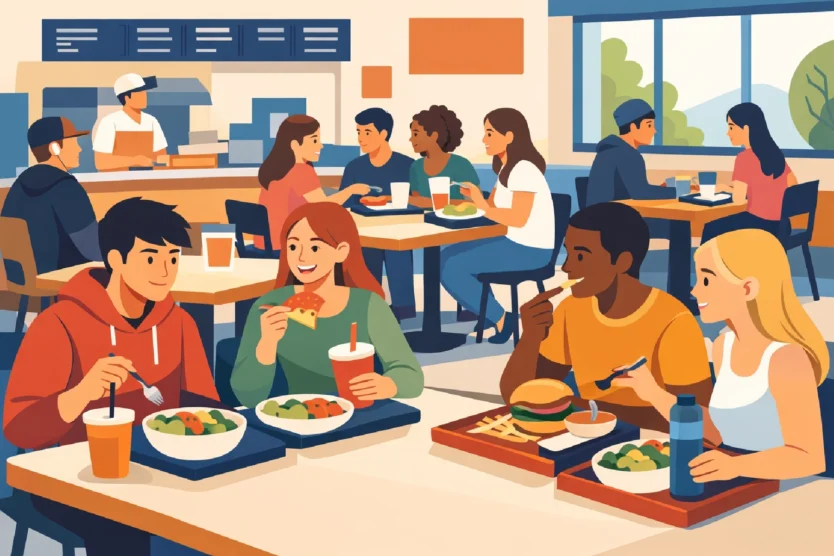
Dining halls often get a bad reputation, but Ellyn shares that campus dining has evolved significantly over the years. Many schools focus on culinary quality, offering a variety of options, and adjust menus based on student feedback. Dining centers are also a community space and one of the easiest places to meet new friends.
Balance Starts with Routine
High school meals are built into the day. Once you get to college, however, building in breaks between classes and scheduling meals is all on you. Ellyn encourages students to find a routine that works for them, even if it changes from day to day or semester to semester. If you don’t have time for a full meal, a balanced snack can still help provide some nutrition and energy.
Food Fuels Focus
What you eat affects your energy, mood, and academic performance. Skipping meals, especially breakfast, can make it harder to focus and retain knowledge. Pairing balanced meals with regular hydration can make a noticeable difference in how alert and focused you feel during class and study time.
Comfort Foods Can Still Fit
Treats and comfort foods can be part of a balance. Let yourself enjoy desserts occasionally without guilt. The key is noticing why you want the comfort food. If food is your main coping tool for stress every day, it may be worth checking in on your stress levels and finding other ways to decompress.
Ask for Help If You Need It
If food or energy levels start affecting your daily life, Ellyn’s advice is simple: ask for help. Most colleges have resources through dining services, health centers, or student services, and someone can help point you in the right direction.
Stay Curious
College is one of the easiest times to try new foods, often without having to cook or commit to a full meal. Try a small portion first, go back for more if you like it, and treat dining as part of the college experience.
Moving from home to campus brings a lot of new routines, and food is one of them. With flexibility, curiosity, and a focus on balance, students can build habits that support both their health and their academics.